Stop Guessing.
See What’s
Actually Driving
Your Athlete.
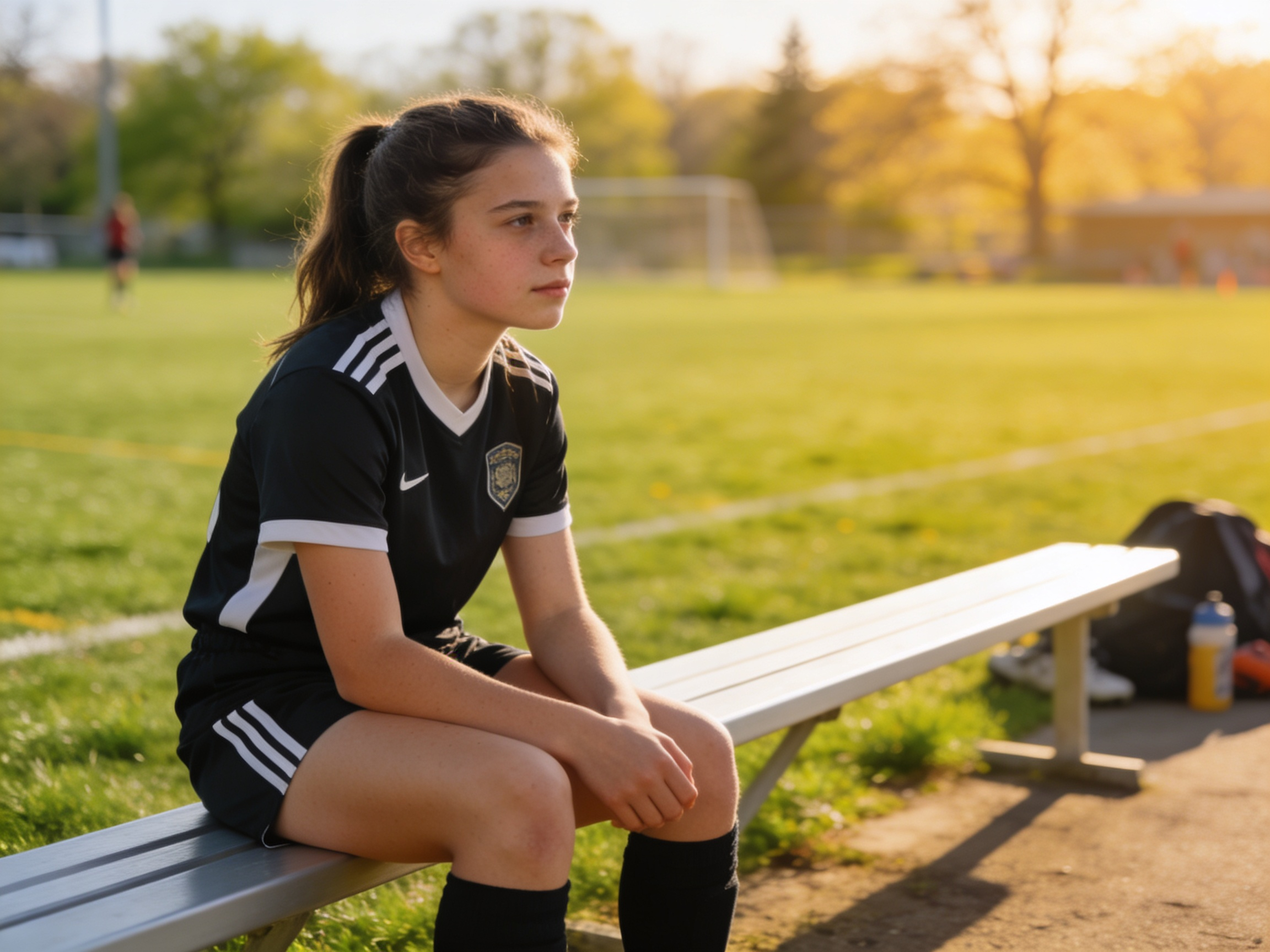
If your athlete looks confident one day and tight the next, it’s usually not about effort.
It’s about how they’re wired under pressure, how confidence gets built or shaken, and how support actually lands.
Wired Edge gives parents and coaches a clear read on what’s going on beneath the surface — and with Edge, you can ask specific questions about your athlete and get guidance you can actually use.
$19 athlete activation. Full profile + 30 days of Edge included. $9/mo after that.
- 5-lens profile showing how your athlete performs under the surface
- Confidence triggers + pressure patterns you can actually recognize
- Communication and coaching style guidance that fits your athlete
- Shareable summary for coaches, parents, and support staff
- Edge access with 60+ guided prompts for coaching, confidence, pressure, communication, and next-step support
Includes 60+ guided prompts. Cancel anytime.
Insight Is Powerful.
Knowing What To Do Changes Everything.
Wired Edge shows what is actually going on beneath the surface. Edge turns that insight into real decisions you can use with your athlete.

Edge moves you from guessing to knowing how to respond.
Turns insight into real action.
Ask real questions about your athlete and get clear, usable guidance for real moments, from post game conversations to confidence dips and pressure situations.
Know how to respond in a way that builds confidence and steadies the moment.
Understand what builds them up, what tightens them, and what can trigger shutdown.
Know when to push, when to back off, and what to say when the moment matters.
Get guidance instantly based on your athlete, not generic advice.
- Should I push right now or back off?
- Why did they shut down after that mistake?
- What should I say after this game?
- How do I build confidence without pressure?
Preview a real Wired Edge profile (Kenzie — Soccer)
Switch lenses to see how the same athlete’s insight changes for a parent vs a coach.
Athlete Performance Snapshot
This athlete is a grounded, quietly intense center back; this snapshot highlights her competitive wiring, communication patterns, motivation cues, pressure responses, predictable performance patterns, and developmental themes.
1. Competitive Identity – Top 5 Indicators
- Measured tempo controller: favors paced involvement with short, forceful interventions rather than continuous pressing; energy output spikes in high-leverage moments.
- Positional disciplinarian: maintains compact spacing and consistent line management, rarely drifting from assigned zones during organized play.
- Deliberate decision-timer: executes clearances and challenges with low latency in structured sequences; decision speed slightly slows when game plans shift abruptly.
- Practical communicator and organizer: issues concise, task-focused direction to proximate teammates, especially around set-piece and transitional moments.
- Stabilizer and teacher within the backline: organizes set-piece responsibilities and models standards through consistent on-field habits.
2. Communication & Motivation Snapshot
She communicates with short, actionable phrases and spatial cues, preferring proximity-based directives that tie directly to the immediate task. She processes information most effectively when it is concrete and linked to on-field reps or clear visual examples, then translates that into concise messages for teammates.
Sustained engagement tracks with measurable progress, predictable routines, and opportunities to clarify or explain structure to others. Extended chaos or broad, abstract feedback reduces immediate engagement until structure is re-established.
3. Under Pressure & Game-Time Tendencies
- Reversion to practiced routines: under stress she returns quickly to rehearsed defensive sequences and set-piece protocols.
- Shortened decision windows: moves from deliberation to faster, decisive clearances and tackles in late-game or high-leverage moments.
- Amplified vocal organizing: increases volume and frequency of directional commands to re-establish line shape after disruptions.
- Brief processing lag with tactical surprises: when systems change suddenly she shows a short pause before re-anchoring to position and spacing.
4. Patterns to Monitor (Situational Tendencies)
- Communication bluntness rises in acute time pressure, producing shorter, more directive phrases.
- Preference for private, quick debriefs before addressing the wider group; public commentary often follows a short internal processing window.
- Vocal output reduces during prolonged chaotic phases and increases once structure returns.
- Adaptation latency is most visible immediately after abrupt tactical shifts or untested system changes.
5. Growth Focus Areas
- Shortening the brief processing lag that follows unexpected tactical changes to re-establish spacing more rapidly.
- Broadening visible leadership beyond proximate teammates so directional calls carry across the full defensive unit more consistently.
- Managing long-duration pacing to sustain higher-quality short-burst interventions across extended high-intensity sequences.
- Increasing on-field verbal projection in moments when wider group alignment is needed quickly, especially during chaotic phases.
- Expanding formal teaching presence in team settings to translate behind-the-scenes organization into visible group direction.
- Deepening flexibility in decision timing so practiced patterns can be adapted more fluidly when opponents force rapid variation.
This snapshot reflects observable behaviors across training and competition and is presented as a focused performance overview for roster-level planning and development conversations.
Parent view not available.
Competitive view not available.
Volunteer view not available.

ATHLETE PERFORMANCE PROFILE
1. Core Competitive Identity
Narrative
Kenzie presents as a grounded, quietly intense center back who brings steady preparation and consistent on-field delivery. Her presence reads as controlled and reliable; she prioritizes structure, positioning, and timing over constant aggression. When match tempo requires escalation, she produces well-timed bursts of intensity rather than sustained high-output sprints. Her visible energy tracks with performance context: in stable phases she stabilizes teammates; when the game becomes unsettled her presence becomes more visibly assertive.
Observable behaviors
- Tempo control: favors measured pacing, stepping up in short, forceful interventions instead of continuous pressing.
- Positional discipline: maintains compact spacing and consistent line management; rarely drifts from assigned zones.
- Decision timing: makes deliberate clearances and challenge choices with low decision latency in organized sequences; slightly slower when plans change suddenly.
- Communication pattern: gives concise, task-focused direction to nearby teammates, often using short commands and spatial cues.
- Escalation behavior: increases vocal volume and physical engagement in high-leverage moments (set pieces, late defensive stands).
Environments that elevate performance
- Clear role definitions and stable defensive structures.
- Training that emphasizes repetition of game patterns and set-piece organization.
- Sessions that combine routine drills with occasional, bounded tactical variations to study and practice.
- Teams that allow private processing time after errors, then return to structured debriefs.
2. Motivation Style
Narrative
Kenzie stays engaged when progress is measurable, routines are predictable, and her role is clearly defined. She responds to environments where effort links to visible improvement and where she can share knowledge or clarify structure for others. Periodic tactical challenges and opportunities to teach or lead within the backline keep her attention high over time.
What drives this individual (observable conditions)
- Clear, measurable goals and progress markers.
- Predictable routines and role clarity on defensive responsibilities.
- Opportunities to communicate and explain structure to teammates.
- Tactical challenges presented as concrete systems to master.
Momentum disruptors (predictable patterns)
- Abrupt, uncontextualized system changes that require immediate improvisation.
- Extended periods of chaotic play without clear structure or settled roles.
- Feedback delivered as broad, abstract direction without accompanying drills or rep-based practice.
3. Patterns Under High Pressure
Narrative
In tense moments Kenzie tightens operational routines and increases focus on core tasks, producing resilient defensive actions and reliable set-piece performance. Pressure produces visible intensity and shorter, more forceful interventions; at the same time, sudden tactical shifts can produce a brief lag while she re-establishes spacing and role expectations.
Competitive strengths in tense moments
- Routine tightening: reverts to practiced defensive sequences and set-piece protocols quickly.
- Consistent tackling and aerial timing under late-game pressure.
- Increased vocal presence to re-establish line shape and organize teammates.
- Low error rate in structured defensive scenarios (marking, zonal alignment).
Pressure patterns (predictable behaviors)
- Shorter decision windows: moves from deliberation to faster, decisive clearances.
- Amplified boundary-setting: louder, more frequent directional commands to nearby players.
- Reversion to familiar reps: prioritizes practiced patterns over improvised solutions when moment intensity rises.
- Brief processing lag after unexpected tactical changes before re-establishing position.
Anticipation notes
- These patterns are most visible after momentum shifts (counterattacks, conceded set pieces) and in late-game defensive sequences.
- Re-establishing structure quickly after a breakdown is where her impact becomes most predictable.
High-impact competitive moments
- Organizing the defensive line immediately after conceding a corner or set piece.
- Late-match situations when the team is protecting a narrow lead and compactness is essential.
- Transition moments where the defensive unit must shift from high press to organized block.
- Training sessions focused on incremental improvements to marking or zonal rotations.
4. Learning Style
Narrative
Kenzie learns best through concrete, structured instruction tied to on-field repetition. Practical demonstrations, step-by-step breakdowns, and the chance to teach back or coach close teammates accelerate retention. Abstract, feel-based coaching or sudden system flips create transient friction unless tied to clear, drillable actions.
Learns best through
- Reps and situational drills that mirror match moments (set pieces, defensive rotations).
- Visuals and film sessions connected directly to practiced sequences.
- Teaching-back opportunities (explaining roles to teammates or leading small-group drills).
- Concise verbal cues linked to spatial landmarks on the field.
Instruction cues that land well
- Concrete, action-oriented phrasing: describe the trigger, the movement, and the call (for example, "When an opponent drives into the channel, step over and call your marker").
- Short, measurable targets (e.g., "win the first header in the six-yard box" or "hold the line until the defensive phase resets").
- Demonstration plus immediate repetition (show, then do 3–5 reps).
- Immediate, objective feedback (count of successful clears, alignment errors).
Anticipation notes
- Learning efficiency increases when new tactics are introduced alongside rep-based drills and a short film review.
- Efficiency decreases when instruction is abstract, open-ended, or lacks direct on-field application.
5. Leadership Style
Narrative
Kenzie leads primarily by example and system maintenance rather than by seeking the spotlight. Her influence grows through consistent routine, dependable presence, and practical problem-solving. Teammates look to her for steady standards and replicable habits; she often assumes organizational tasks around the defensive unit.
Leadership strengths
- Modeling: consistently enacts the standards she expects from others (positioning, work-rate).
- Organizational influence: naturally organizes set-piece responsibilities and defensive spacing.
- Quiet amplification: raises standards through repeatable demonstrations and concise on-field cues.
- Reliability under routine: teammates rally to her steady execution in training and games.
Leadership expansion opportunities
- Increasing visible verbal leadership to project influence across the full defensive unit.
- Taking on formal teaching moments in session plan segments (leading walkthroughs, mini-coaching).
- Briefly stepping into larger-group communications to translate behind-the-scenes preparation into visible direction.
6. Communication Tendencies
Narrative
Kenzie communicates with practical precision: short, actionable directives and spatial calls that tie directly to immediate tasks. When under time pressure she becomes more blunt and concise, focusing on what must change in the moment. She connects best after a brief private processing window, then delivers structured feedback to the group.
Communication strengths
- Clarity: gives specific, task-oriented commands that teammates can act on immediately.
- Timing: communicates primarily in proximity to the play, which keeps directives relevant and actionable.
- Efficiency: uses short phrases and spatial markers rather than long explanations.
- Reliability: consistent volume and content during set-piece organization and defensive transitions.
Patterns to monitor (predictable tendencies)
- Increased bluntness under acute time pressure or when re-establishing structure.
- Preference for private, short debriefs before addressing the full group.
- Reduced commentary during prolonged chaotic phases; vocal output increases when structure is restored.
Anticipation notes
- Her concise, task-focused communication most influences alignment during set pieces and transition periods.
- Providing brief windows for private processing before group calls improves clarity in her messaging.
7. Performance Patterns
Narrative
Kenzie responds in predictable ways to changes in tempo and workload: she leans on structured routines, repeats high-effort sequences in training, and tightens decision timing during critical moments. Extended chaos, unclear roles, or prolonged high-intensity sequences shift her behavior toward more conservative, repetition-based responses.
Most notable patterns (observable)
- Greater reliance on practiced sequences when the game is unsettled (returns to drilled patterns).
- Increased output in short bursts during high-leverage moments; pacing reduces during sustained scramble phases.
- Slower adaptation latency when systems change abruptly mid-game, followed by re-anchoring to position.
- Communication becomes more directive and compressed as fatigue or time pressure increases.
8. Team Chemistry & Role Fit
Narrative
Kenzie fits best in teams that prize routine, role clarity, and dependable execution. She becomes a stabilizing presence in squads that practice structured defensive patterns and value mutual reliability. Relationships form through shared work and sustained, demonstrable competence; trust tends to grow after consistent performance in rehearsed contexts.
Thrives most in
- Defensive units with clearly defined roles and compact structure.
- Environments that combine predictable training cycles with occasional, framed tactical experiments.
- Teams that allow role-specific teaching opportunities (e.g., senior player-led set-piece sessions).
- Locker rooms that value steady standards and follow-through over theatrical displays.
Ideal Coaching Style
- Be concrete and structured: present tactical changes as step-by-step actions with immediate, drillable practice.
- Link film to reps: pair short video reviews with on-field repetition so insights are applied right away.
- Use measurable targets: set clear performance markers and track progress in short cycles.
- Provide private processing windows: allow brief time for Kenzie to internalize feedback before asking her to communicate to the group.
- Offer teaching roles: create opportunities to lead small-group drills or explain set-piece responsibilities.
- Introduce change in bounded increments: frame system adjustments as concrete phases with a few focused reps rather than abrupt, open-ended shifts.
- Give concise cues: use spatial, action-oriented phrasing coaches and teammates can repeat (e.g., trigger, movement, call).
OVERALL SUMMARY — ATHLETE SNAPSHOT
Top Strengths
- Dependable, consistent execution in structure-based defensive roles.
- Strong positional discipline and effective, low-error decision timing in practiced scenarios.
- Ability to communicate concise, actionable direction that raises group alignment.
- Reliable escalation under high-leverage moments (set pieces, late-game defense).
- Effective teacher/organizer within defensive units.
Growth Focus Areas
- Shortening adaptation latency when systems are changed mid-game to re-establish spacing faster.
- Broadening visible leadership to encompass the entire defensive unit during chaotic phases.
- Managing long-duration pacing to sustain consistent output across extended high-intensity sequences.
- Increasing on-field verbal projection in moments when wider group alignment is needed quickly.
Competitive Notes
What elevates this athlete
- Consistent routines, clear role assignments, and measurable progress markers.
- Opportunities to lead small-group drills and explain tactical choices.
- Training that pairs film review with immediate, rep-based application.
What accelerates development
- Framing tactical changes as concrete steps with short practice cycles and teach-back moments.
- Short, targeted drills that build quicker adaptation to varied match scenarios.
- Structured recovery and rotation to preserve high-quality short-burst interventions.
How this athlete tends to respond in competitive environments
- Reverts to practiced patterns and tight positional discipline when pressure rises.
- Delivers decisive, compact interventions during high-leverage moments and increases vocal organization.
- Shows brief processing lag when confronted with abrupt, untested tactical shifts, then resumes steady performance.
This profile is based on standardized pattern mapping applied consistently across athletes to support comparative insight across a roster.
Snapshot Safeguard: This snapshot reflects observable patterns across training and competition. It is not an evaluation of character, effort, or potential, but a tool to support clearer communication, role alignment, and development conversations.
Developmental Anchor: These patterns represent tendencies observable under specific conditions and are intended to support awareness, preparation, and long-term development.